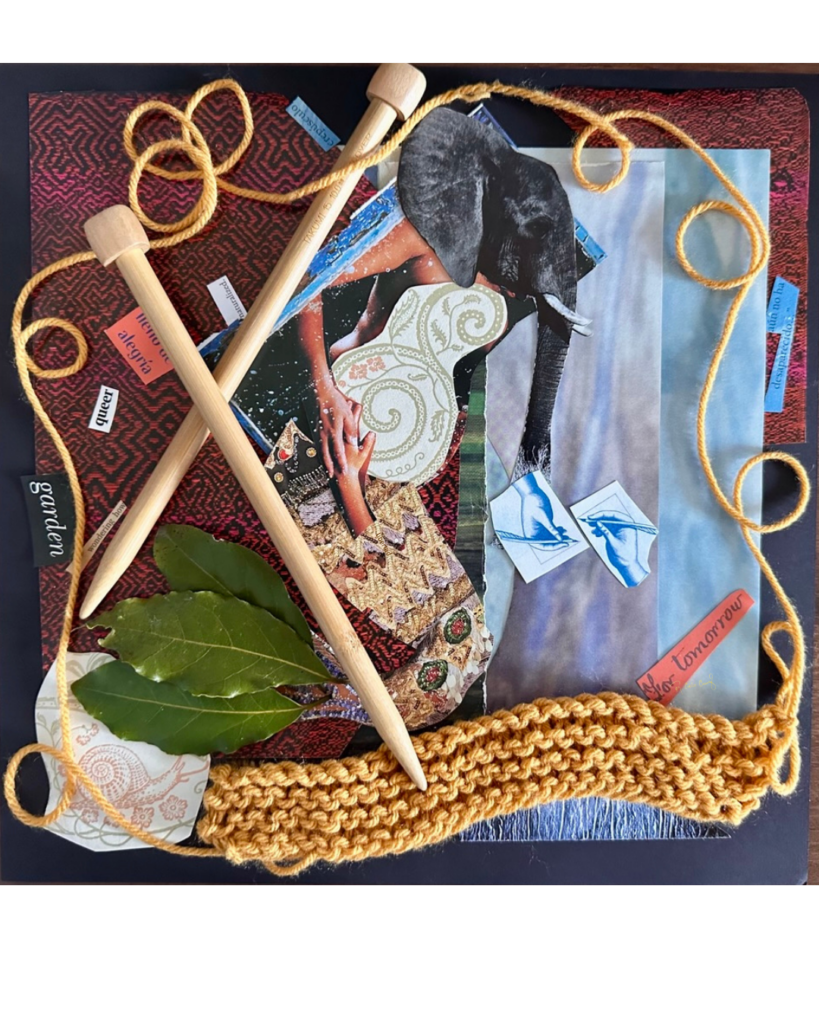
Culture Corner Series: Making New Words, Knitting New Worlds (Part II)
This essay is the second in a series exploring the language that shapes our lives, our politics, and our possibilities. Each installment features words that have helped me make meaning of my lived experience and of the world we are building together.
“Language was just difference. A thousand ways of seeing, of moving through the world. No; a thousand worlds within one.” R.F. Kuang, “Babel”
It’s Women’s History Month in the year 2026 and I’m wondering how we still exist in the cage that is gendered language? In my own desire to find new words, I often think about folks like writer Akwaeke Emezi and actor Ser Anzoategui who have pushed back on the limitations of such narrow language, demanding recognition from institutions and structures that benefit off their talents. . \ Their dreaming, fighting for, and helping to shape a vision of our liberated futures possible because of the work of our Black, Indigenous, and People of Color mentors and ancestors. At the same time, we also bear witness to the brilliant queer and trans BIPOC who are creating new terms, new holidays, new awards categories that give us imaginative ways of being in the world on our terms.
“Sea horse dad” — often used to describe a man or transmasculine person who has birthed children — is a relatively new term that makes me wish I had had something to call myself, something that fit better. Twenty five years ago, my communities didn’t really use the term “non-binary”. The language that was available always felt like a too small blanket, one that maybe didn’t fit because some people insisted on (sometimes arbitrary) rules about who it could cover. While policing the boundaries of identity was the norm and often felt understandable or necessary in communities under threat, it left many of us in the gaps. When I was pregnant and feminized and frustrated with the tiny strands of yarn in my large, masculine hands, all I wanted was a term for myself that was more accurate, more descriptive, and more mine. Maybe one that described the gender rebellion that was sitting right next to my very pretty and long haired boyfriend who knit smaller and more intricately dainty things with his even larger, upright-bass-playing hands.
If folks in my community had finally seen past the long, black wavy hair that pregnancy hormones had caused to grow from my buzz cut to halfway down my back, they might have seen my genderqueerness. Maybe they would’ve called me a long haired butch (a term now so popular as to be an acronym as in “hot lhb alert”) or a non-binary or enby pregnant person. Any of it would have felt a lot better than the “earth mama” type “compliments” I ran into at the time (and now cringe about in hindsight.)
In the years since my pregnancy and as I grew in my analysis around my own gender identity, I began to understand the limits of not having words that fit me and have met so many more people like me. Collectively, we have started to create, try on, and expand new terms to claim our place in the world and expand these worlds we were born into.
As the brilliant Alok Vaid-Menon hilariously reminds us, “all words are made up.” Like these words I’m knitting together with the ideas and vocabulary available to me right now. It’s more than I had before. Bit by bit, these words have come about — some 100 years ago, some in the last 10 years. These words have transformed social landscapes, changed how we live, and expanded what can be named. And, not only is that beautiful to me, it’s also necessary. Language is formed and often shifts shape to serve new purposes and new circumstances. Other times, or maybe in the same instance like a Mobius strip, the words become cultural portals that create new realities.